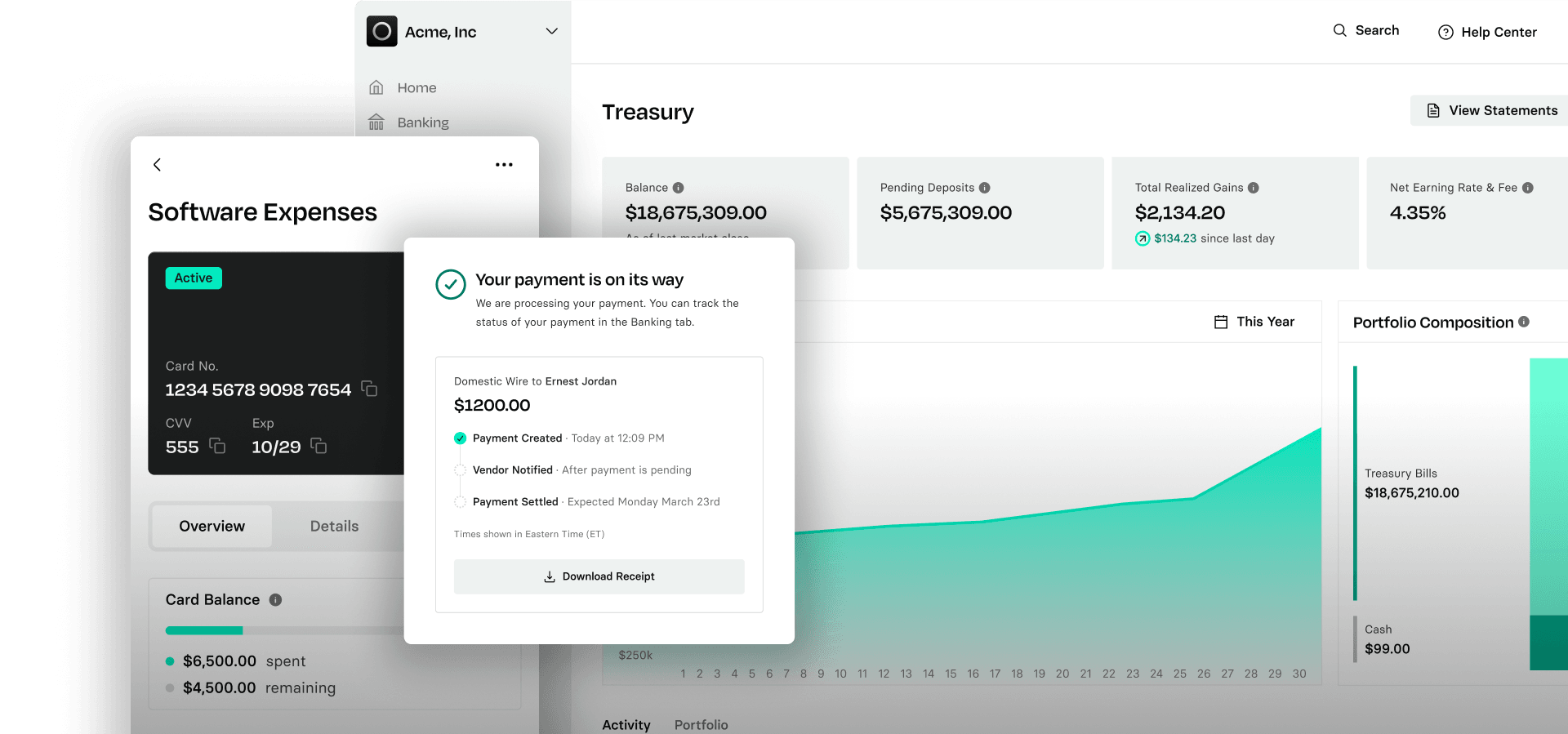

One platform, no tiers
Rho gives you banking, cards, expense management, AP, invoicing, and treasury in one platform at $0. No Plus tier at $35. No Pro tier at $350. No paywall between you and the features your team needs to scale.
Rho and Mercury are the two platforms most startups shortlist for business banking. Neither is a bank; both partner with FDIC-insured institutions and differ in pricing, deposit structure, yield access, and support. This comparison lays out the differences by stage, including the cases where Mercury is the better choice.
Supporting startups at every stage
Rho scales with your business fast, no extra software fees and no paywalls blocking your momentum.
Rho gives you banking, cards, expense management, AP, invoicing, and treasury in one platform at $0. No Plus tier at $35. No Pro tier at $350. No paywall between you and the features your team needs to scale.

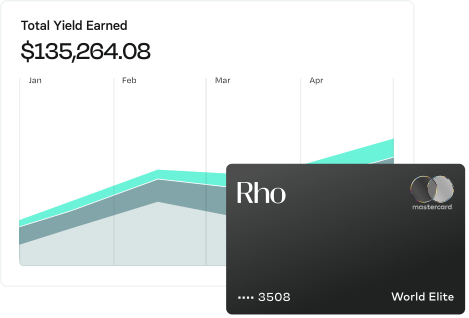
Earn competitive net yield on idle cash with T-Bills, Vanguard VFSTX, and Morgan Stanley MULSX, held together in the mix that fits your runway. Rho rebalances automatically. Mercury Treasury starts at a $250K minimum and carries a monthly fee of 0.15% to 0.60% based on balances (mercury.com, as of 08/17/2026).

Every Rho account gets 24/7 human support: a real person by phone or in-app chat, included free on every tier. Mercury's pricing page lists no phone support option on any tier (mercury.com/pricing, as of 08/17/2026), and dedicated relationship managers start at Mercury Pro, from $299/mo billed annually ($350/mo monthly), or with a $10M+ balance.
See how Rho and Mercury stack up on fees, support, and scale.
FDIC coverage structure
Checking insured up to the standard $250K through Webster Bank, a division of Santander Bank, N.A., Member FDIC. Savings eligible for up to $75M in FDIC deposit insurance per depositor through American Deposit Management Co. and its partner banks (a network of 400+ insured institutions), subject to FDIC requirements.
Savings yield
Up to 1.00% yield on Rho Business Savings (variable, as of 08/17/2026); withdrawals to checking settle within 2 business days.
Treasury
Rho Treasury, $50K minimum. Rates are variable; current rates at rho.co/treasury. Investments are not FDIC insured.
Monthly fee
$0. No paid software tiers.
Card cashback
Up to 2% cashback with Rho Platinum (terms apply), on up to $1M in eligible annual card spend; standard Daily Terms rate 1.25%.
Bill pay
Included, with AP automation and accounting sync.
Accounting integrations
NetSuite, QuickBooks, and Sage Intacct integrations included.
Multi-entity support
Multi-entity banking supported on one platform; users can switch between organizations and entities in Rho (rho.co, as of 08/17/2026).
FDIC coverage structure
Checking insured up to the standard $250K through Webster Bank, a division of Santander Bank, N.A., Member FDIC. Savings eligible for up to $75M in FDIC deposit insurance per depositor through American Deposit Management Co. and its partner banks (a network of 400+ insured institutions), subject to FDIC requirements.
Up to $5M in FDIC insurance through partner banks (Choice Financial Group and Column N.A., Members FDIC) and their sweep networks (mercury.com, as of 08/17/2026).
Savings yield
Up to 1.00% yield on Rho Business Savings (variable, as of 08/17/2026); withdrawals to checking settle within 2 business days.
No standalone business savings APY advertised; yield comes through Mercury Treasury (mercury.com, as of 08/17/2026).
Treasury
Rho Treasury, $50K minimum. Rates are variable; current rates at rho.co/treasury. Investments are not FDIC insured.
Treasury by Mercury Advisory, $250K minimum balance for access, plus a monthly fee of 0.15% to 0.60% based on balances (mercury.com, as of 08/17/2026). Rates are variable; current rates at mercury.com. Investments carry SIPC coverage via Apex Clearing and are not FDIC insured.
Monthly fee
$0. No paid software tiers.
Free tier $0; Mercury Plus $35/mo; Mercury Pro $350/mo ($29.90 and $299 with annual billing, the pricing page's default display; mercury.com/pricing, as of 08/17/2026).
Card cashback
Up to 2% cashback with Rho Platinum (terms apply), on up to $1M in eligible annual card spend; standard Daily Terms rate 1.25%.
1.5% cashback on the Mercury IO card, no annual fee (mercury.com/credit, as of 08/17/2026).
Bill pay
Included, with AP automation and accounting sync.
Included free on all tiers (mercury.com/pricing, as of 08/17/2026).
Accounting integrations
NetSuite, QuickBooks, and Sage Intacct integrations included.
Recurring invoices require Plus; NetSuite categorizations require Pro (mercury.com/pricing, as of 08/17/2026).
Multi-entity support
Multi-entity banking supported on one platform; users can switch between organizations and entities in Rho (rho.co, as of 08/17/2026).
Multiple businesses can be managed under one login (mercury.com/pricing, as of 08/17/2026); per-entity feature details vary.
Last verified August 17, 2026. Every figure comes from Rho's and Mercury's public pages as of that date; rates and terms change, so check each provider's site for current numbers. Up to 2% Cashback with Rho Platinum on up to $1M in eligible annual card spend; standard rates 1.25% (Daily Terms) and 1% (Monthly Terms); terms and conditions apply. All product names, logos, and brands are property of their respective owners and are used for identification purposes only; use does not imply affiliation or endorsement.
If you are two founders with a modest balance, no finance hire, and simple needs, Mercury's free tier covers core banking with no monthly fee. The product is self-serve, and 1.5% cashback on the IO card is competitive at this stage. Pick Mercury if you value a purely self-serve experience and do not expect to need a human on the phone.
Pick Rho at this stage if you are already holding $50K or more in idle cash (Rho Treasury's minimum is $50K, one-fifth of Mercury Treasury's $250K; mercury.com/treasury, as of 08/20/2026), or if you want phone access to support from day one.
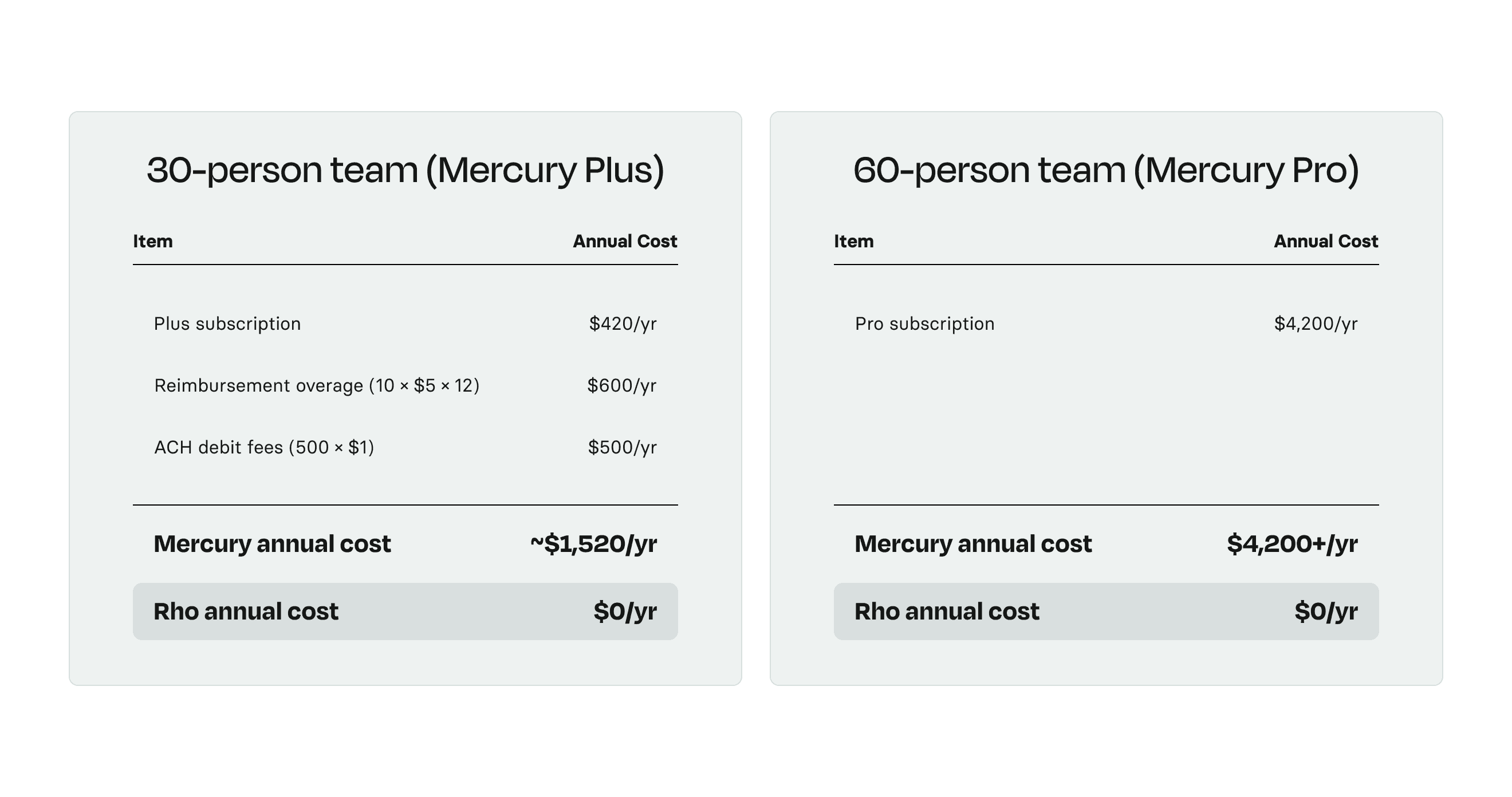
Once you have a team submitting expenses, an accountant closing the books, and a real cash balance, the comparison shifts. Mercury places recurring invoicing behind Plus ($35/mo) and NetSuite categorizations behind Pro ($350/mo), while Rho includes AP, expense management, and ERP integrations without a software fee. Rho also offers phone and chat support with a human on every account. This is the stage where most switching happens.
Both platforms can hold multiple businesses under one login: Rho supports switching between organizations and entities on one platform (rho.co, as of 08/17/2026), and Mercury supports managing multiple businesses under one login (mercury.com/pricing, as of 08/17/2026). Consolidation is one of the most common reasons operators give for choosing Rho, but the right answer depends on how many entities you run and what per-entity controls you need. Demo both with your actual entity structure before deciding.
Two structural differences matter for companies parking significant cash. First, minimums: Rho Treasury opens at $50K while Mercury Treasury requires $250K, so balances between $50K and $250K can earn treasury yield at Rho but not at Mercury. Second, deposit insurance ceilings: Rho savings is eligible for up to $75M in FDIC coverage per depositor through American Deposit Management Co. and its partner banks, versus up to $5M at Mercury through its partner banks' sweep networks. Treasury investments at either provider are securities, not deposits, and are not FDIC insured. Compare current rates directly at rho.co/treasury and mercury.com, since both change.
Pros
No monthly software fees or paid tiers at any company size
Up to 2% cashback with Rho Platinum (terms apply); 1.25% standard on Daily Terms
Treasury access from $50K; savings with up to $75M in FDIC coverage per depositor via American Deposit Management Co. and its partner banks, subject to FDIC requirements
Human support by phone and chat on every account
AP automation, expense management, and NetSuite, QuickBooks, and Sage Intacct integrations included
Account application takes less than 10 minutes
Cons
Savings yield (up to 1.00%, variable) is modest; higher yield requires the $50K Treasury minimum
Checking FDIC coverage is the standard $250K; the $75M figure applies to savings only
Pros
Free tier covers core banking with no monthly fee
Fully self-serve product and onboarding
1.5% cashback on the IO card with no annual fee
Free bill pay on all tiers
Up to $5M FDIC insurance through partner bank sweep networks
Cons
Recurring invoicing requires Plus ($35/mo); NetSuite categorizations require Pro ($350/mo), and a dedicated relationship manager requires Pro or a $10M+ balance on any tier
Mercury Treasury requires a $250K minimum balance and carries a monthly fee of 0.15% to 0.60% on balances
Reimbursing out-of-pocket expenses for more than 5 active users per month requires a paid plan, starting at $35/mo (mercury.com/pricing, as of 08/17/2026)
No phone support option appears on Mercury's pricing page; support is advertised as 24/7 online with a 5-minute typical response (mercury.com, as of 08/17/2026)


“It’s nice to feel so cared for.”
Atul Raghunathan, Founder & CRO

"Our accountants love them."
Landseer Enga & Anam Hira, Co-Founders

"They've scaled with us."
James Jiang, Co-founder & CEORho gives you cards, AP, expenses, banking, and yield in one platform with no hidden fees or point games.
Every Rho customer gets instant access to real humans who know your business with typical response times under a minute so you never stall your momentum.
Every Rho customer gets fast, human support with real operators who can solve AP, card, and banking issues in minutes, not ticket queues.
Rho Expenses handles reimbursements and organizes every transaction in real time so you stay compliant without extra tools or busywork.
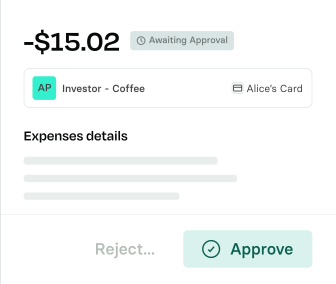
Rho Bill Pay scans invoices with AI, route approvals automatically, and moves money directly from your Rho accounts without the chase.
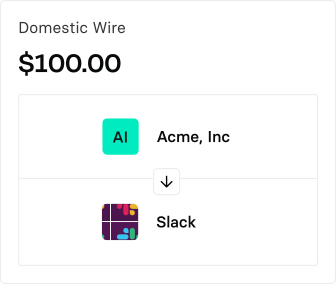
Rho Accounting connects banking, cards, and treasury so your books stay clean, synced, and audit ready without manual cleanup.
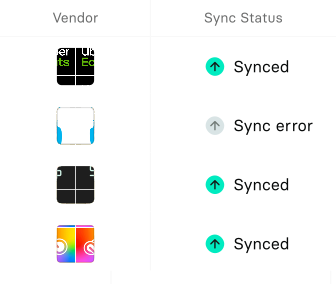
Every Rho customer gets instant access to real humans who know your business with typical response times under a minute so you never stall your momentum.
Every Rho customer gets fast, human support with real operators who can solve AP, card, and banking issues in minutes, not ticket queues.
Rho Expenses handles reimbursements and organizes every transaction in real time so you stay compliant without extra tools or busywork.
Rho Bill Pay scans invoices with AI, route approvals automatically, and moves money directly from your Rho accounts without the chase.
Rho Accounting connects banking, cards, and treasury so your books stay clean, synced, and audit ready without manual cleanup.
We show up fast, solve what matters, and obsess over you winning.
Evaluate both the same way: identify the chartered banks holding the deposits and the FDIC structure. Rho checking is held at Webster Bank, a division of Santander Bank, N.A., Member FDIC, insured up to the standard $250K, and Rho savings is eligible for up to $75M in FDIC deposit insurance per depositor through American Deposit Management Co. and its partner banks, subject to FDIC requirements. Mercury deposits are held at Choice Financial Group and Column N.A., Members FDIC, with up to $5M in coverage through their sweep networks. FDIC insurance at either platform protects against the failure of an insured bank holding your deposit; it does not protect against the failure of Rho or Mercury themselves.
It depends on your balance. Rho Business Savings pays up to 1.00% (variable, as of 08/17/2026); withdrawals to checking settle within 2 business days. For larger balances, Rho Treasury opens at $50K and Mercury Treasury at $250K, so between $50K and $250K only Rho offers treasury yield. Both treasury products carry variable rates that change frequently, so compare current rates at rho.co/treasury and mercury.com rather than relying on any static figure. Treasury investments are not FDIC insured at either provider.
Yes. Opening a Rho account takes less than 10 minutes, and Rho's team assists with migration, including moving balances, updating payment rails, and recreating vendor and payroll flows. Most companies run both accounts in parallel for a billing cycle before closing the old one.
Mercury's core tier is free. Paid tiers are Mercury Plus at $35/mo and Mercury Pro at $350/mo, or $29.90 and $299 with annual billing, which is the pricing page's default display (mercury.com/pricing, as of 08/17/2026). Rho has no monthly software fee at any tier.
Mercury pays 1.5% cashback on the IO card. Rho pays 1.25% standard on the Rho Card with Daily Terms (1% on Monthly Terms), and up to 2% with Rho Platinum (terms apply) on up to $1M in eligible annual card spend.
If you want a purely self-serve product, run a small and simple operation, and do not expect to need phone support or treasury yield below a $250K balance, Mercury's free tier is a strong fit and its product polish is real. The gap opens as headcount, entities, and cash balances grow.