
Understanding Fields in Rho
What makes up a Field
Name. What the Field is called: Category, Project, Client, Job Number. This is the column header you will see on your transaction tables.
Options. For a predefined-list Field, the set of choices your team picks from. You can add options one at a time, or in bulk by pasting comma-separated values into the option input.
Input type. Predefined list (pick from options) or free text (type a value per transaction, useful for things like job numbers).
Each transaction takes one option per Field. If one payment covers several things, you can split the transaction and give each portion its own option and amount.
You can have up to 7 active Fields. Archived Fields do not count toward the limit, and archiving never deletes historical data.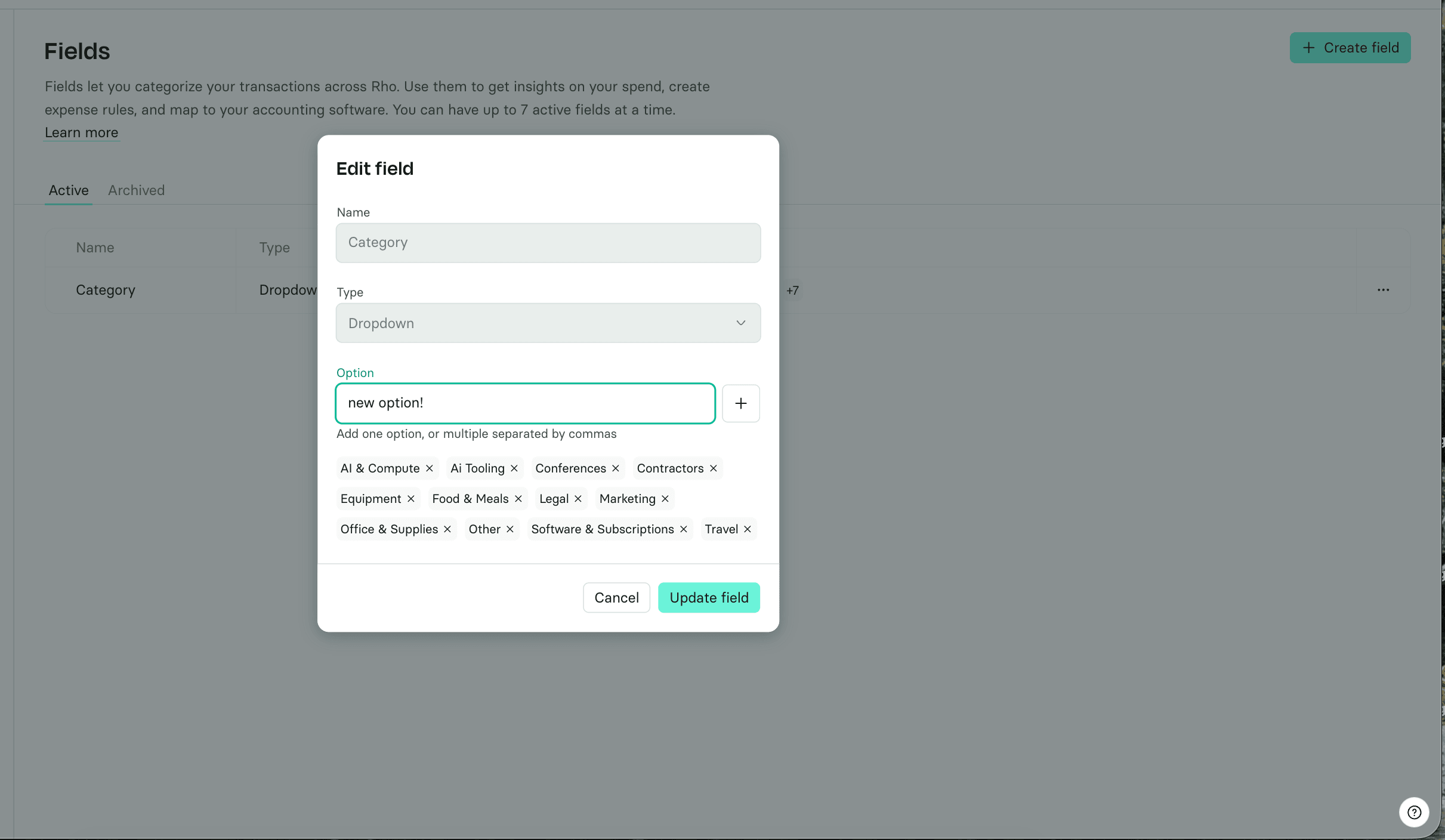
The starter Category Field
New accounts start with a suggested Field named Category, pre-filled with 10 common options: Software & Subscriptions, AI & Compute, Marketing, Travel, Food & Meals, Office & Supplies, Equipment, Contractors, Legal, and Other.
You can rename it, edit the options, or skip it and build your own. It exists so you can start tagging spend on day one without configuring anything.
Where Fields appear
Fields are available on every transaction type: card transactions, banking transactions, payments, bills, reimbursements, and invoices. They also live on cards, where a default option applies automatically to that card's transactions. Every transaction CSV export includes your Fields as columns.
One deliberate exception: people. Fields apply to money movement, not to users, so you will not see Fields anywhere in user management.
Your account does not include a Reporting tab. That tab houses the Departments and Labels pages used by longer-tenured accounts. Your spend views live directly on the transaction tables: one column per Field, filters by Field, and CSV export. Fields-native reporting views are on the roadmap.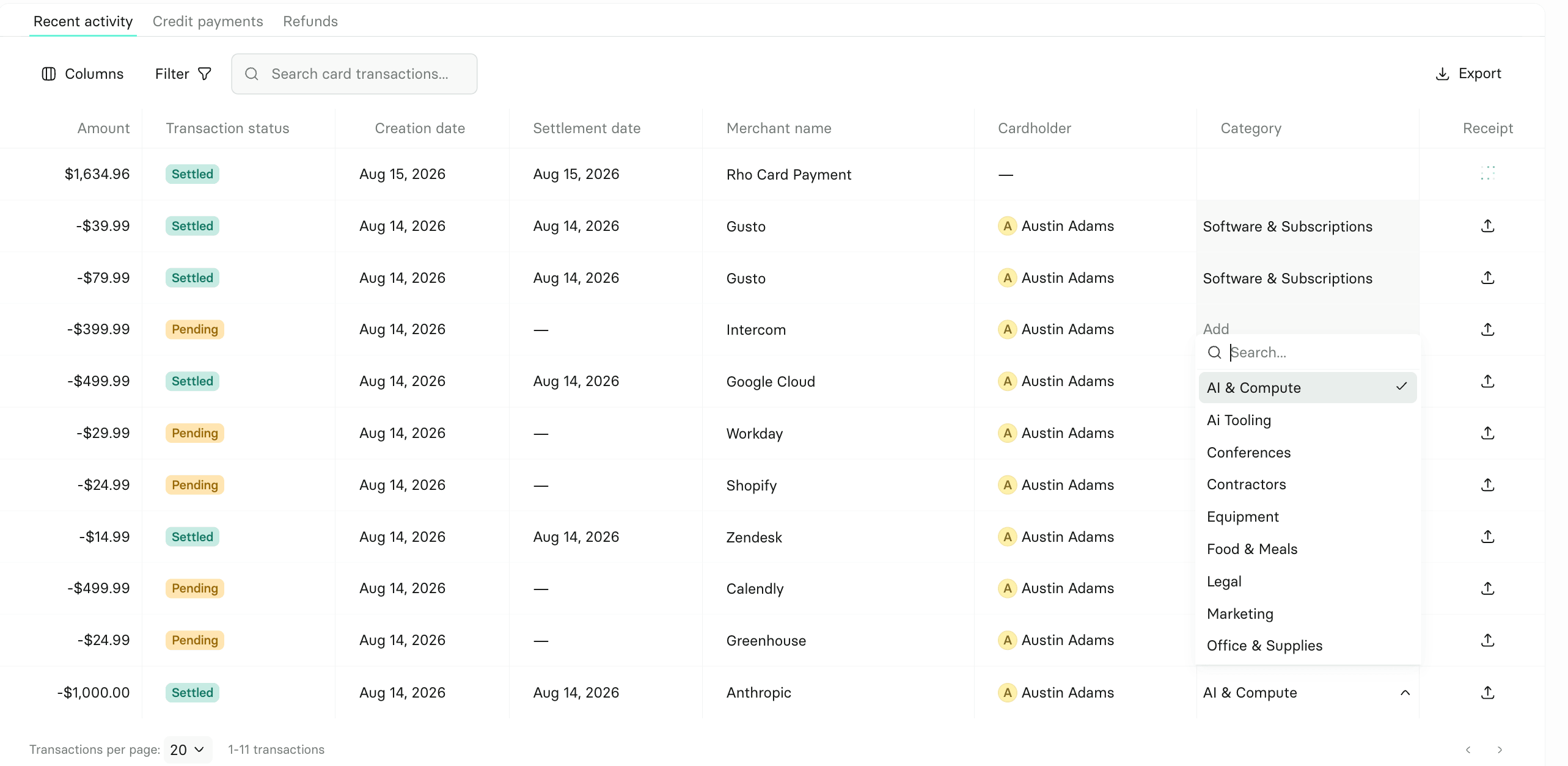
Fields and cards
Every card can carry a default option for each Field. New transactions on that card inherit the default automatically and show an AUTO indicator until someone overrides them. This is the easiest way to track spend by person or team: give each teammate's card a default, and their spend rolls up with no per-transaction work.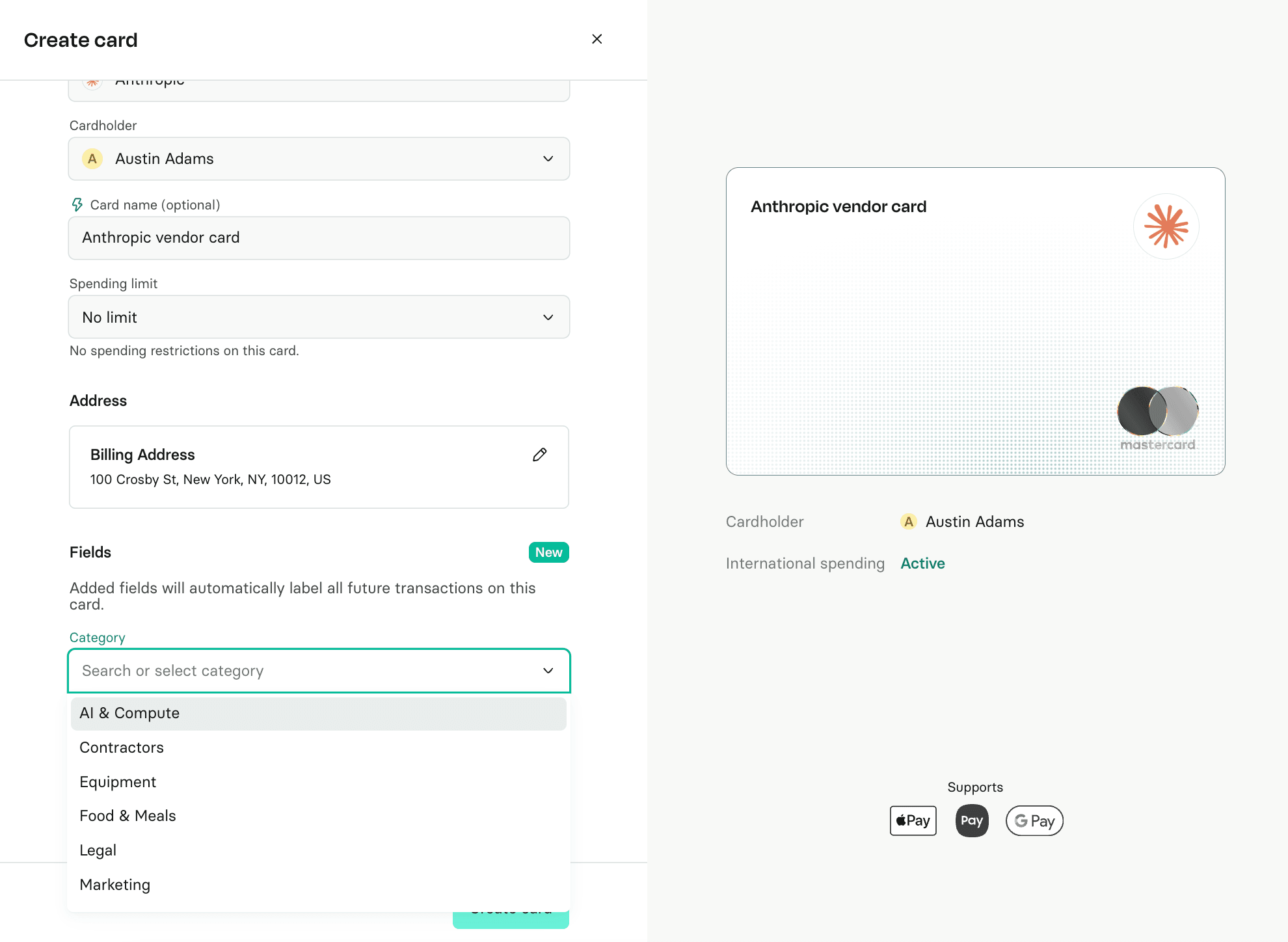
A note on card repayments
Card repayments do not carry Fields. A repayment moves money from your account to pay your card balance; the spend itself was already categorized on the original card transactions, so categorizing the repayment would double-count it. Card purchase refunds do carry Fields.
Who can do what
Field access follows your role in Users › Roles:
Permission | What it allows |
View fields | See Fields and applied options on transactions you have access to |
Edit field values | Apply options to transactions and cards you have access to |
Manage field configuration | Create, rename, and archive Fields and their options in Settings |
Related articles: How to Set Up and Manage Fields · How to Apply Fields to Transactions