


Key takeaways
Fuel cards help small businesses control fuel spending by offering real-time tracking, spending limits, and fuel-only controls.
Different cards serve different needs, from cash-back credit cards to fleet cards for small business programs with driver IDs and purchase controls.
Universal fuel cards like AtoB offer broad acceptance, while brand-specific cards like Shell provide stronger rebates for consistent station use.
Cash-back cards such as Blue Cash Preferred® and Discover it® Chrome work best for very small fleets or single-driver operations that don’t need fleet-level controls.
Rho supports broader expense oversight by combining company cards, real-time controls, and integrated expense tracking—helping small businesses manage fuel expenses alongside all other operating costs.
Fuel is a tough cost to manage for small businesses with vehicles. Prices shift fast, and U.S. Energy Information Administration (EIA) data shows retail gasoline fuel prices can swing sharply with changes in supply, refinery capacity, or demand.
As your business fleet grows, these recurring fuel expenses start to add up. Without the right fuel management cards, it becomes harder to track fuel purchases, prevent unauthorized spending, or identify unusual activity. This is where fuel cards for small businesses, small business gas cards, and fuel card programs can streamline expense management and provide clearer insights into what’s happening across your fleet.
In this guide, we’ll explain gas credit cards, how they work, and the best fuel cards for small business owners in 2026. Whether you need spending controls, better real-time fuel visibility, or fuel discounts through rebates, we’ll help you pick the right card based on your business needs.
What is a gas credit card?
A gas credit card is a type of payment card designed to help small business owners manage fuel costs more effectively. Some operate like small business credit cards fuel rewards, offering cash back or points at gas stations, while others function as corporate fuel cards, fleet fuel cards, or fuel-only cards with driver ID prompts and deeper expense tracking. These fuel management cards allow you to monitor fuel activity and gain visibility into fuel spending across your drivers and vehicles.
How do gas credit cards work?
Gas credit cards work like standard business credit cards, but they’re built specifically for fuel purchases. When someone on your team fills up, the transaction appears in real-time, often with details such as driver ID, location, and fuel gallons.
Many fleet cards for small business operations include rebates, spending limits, dashboards, mobile app controls, fraud protection, and account management tools that simplify reconciliation and reduce manual reimbursements. These support SBA guidance for maintaining accurate records and separating personal vs. business expenses.
5 best fuel cards for small businesses
Choosing the right business fuel card depends on how your business fleet operates, where your drivers fuel up, and how much control you want over daily fuel spending. Below are fuel card options that balance rewards, control, acceptance, and overall business gas card benefits.
1. Rho Corporate Card
Best for full visibility and spend control
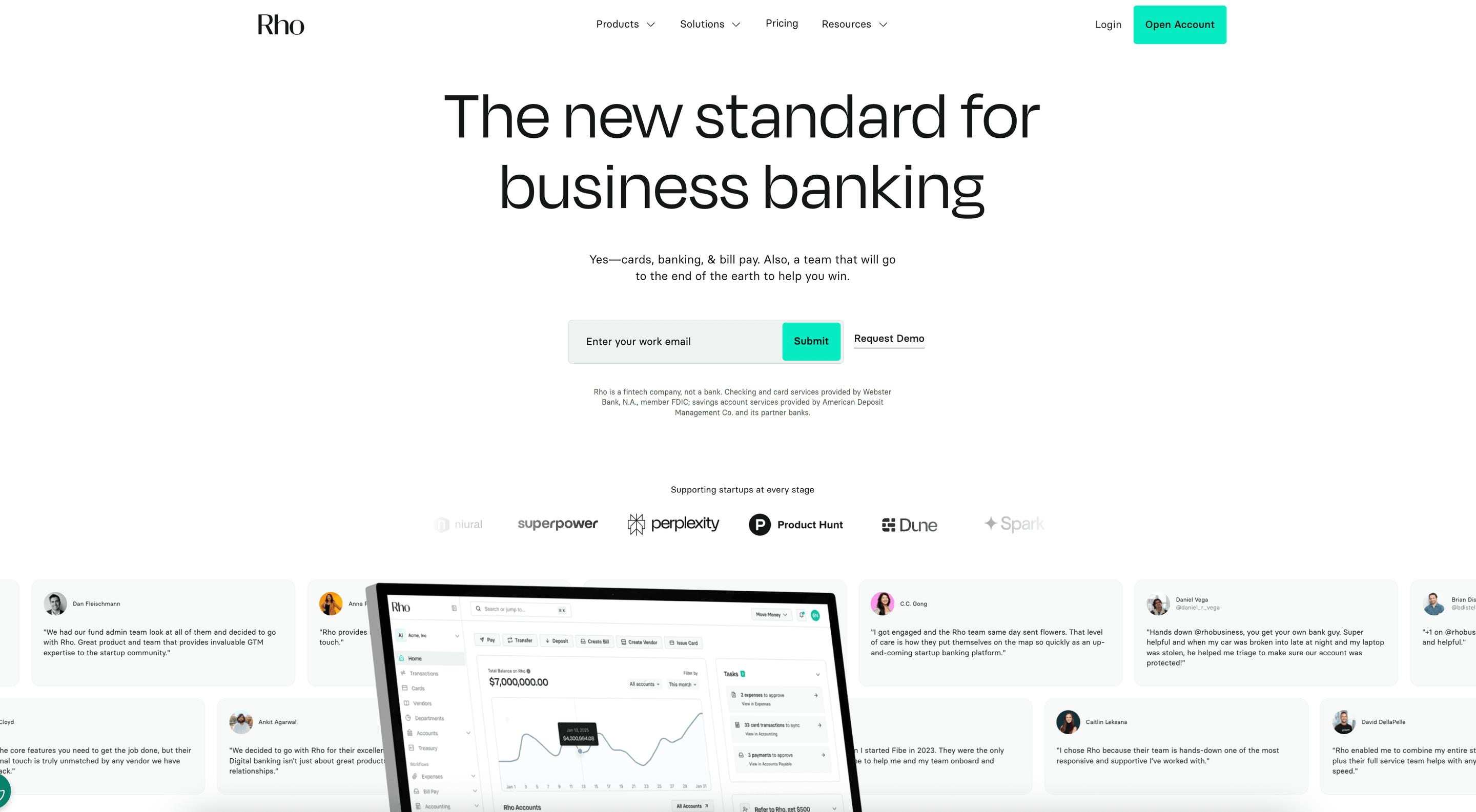 Rho Corporate Card is built for small businesses that want to manage fuel spending alongside all other company expenses in one system. Rho provides real-time controls, unlimited virtual and physical cards, and detailed tracking, making it useful for businesses assigning cards to multiple drivers.
Features:
Up to 2% cash back for Rho Platinum members on eligible spend (based on payment terms)
Real-time spend controls to set limits per driver, category, or merchant
Unlimited virtual and physical cards for team members and drivers
Integrated expense management with receipt capture and automated categorization
Unified dashboard that connects cards, banking, and accounting integrations in one platform
Pros and cons of Rho Corporate Card
Pros | Cons |
|
|
2. Blue Cash Preferred® Card from American Express
Best for small business owners wanting cash back
 The Blue Cash Preferred® Card from American Express appeals to small business owners who want strong cash-back rewards on fuel purchases without adopting a full fleet management system. The card offers elevated rewards at gas stations while also rewarding common everyday categories such as supermarkets and streaming services.
Features:
3% cashback at U.S. gas stations, with higher 6% rewards at U.S. supermarkets and select streaming services
Online dashboard to review transactions and rewards
No annual fee for the first year, then an ongoing annual fee applies
Purchase protections and Amex customer support
Pros and cons of Blue Cash Preferred® Card from American Express
Pros | Cons |
|
3. Discover it® Chrome
Best for simple, no-fee gas rewards
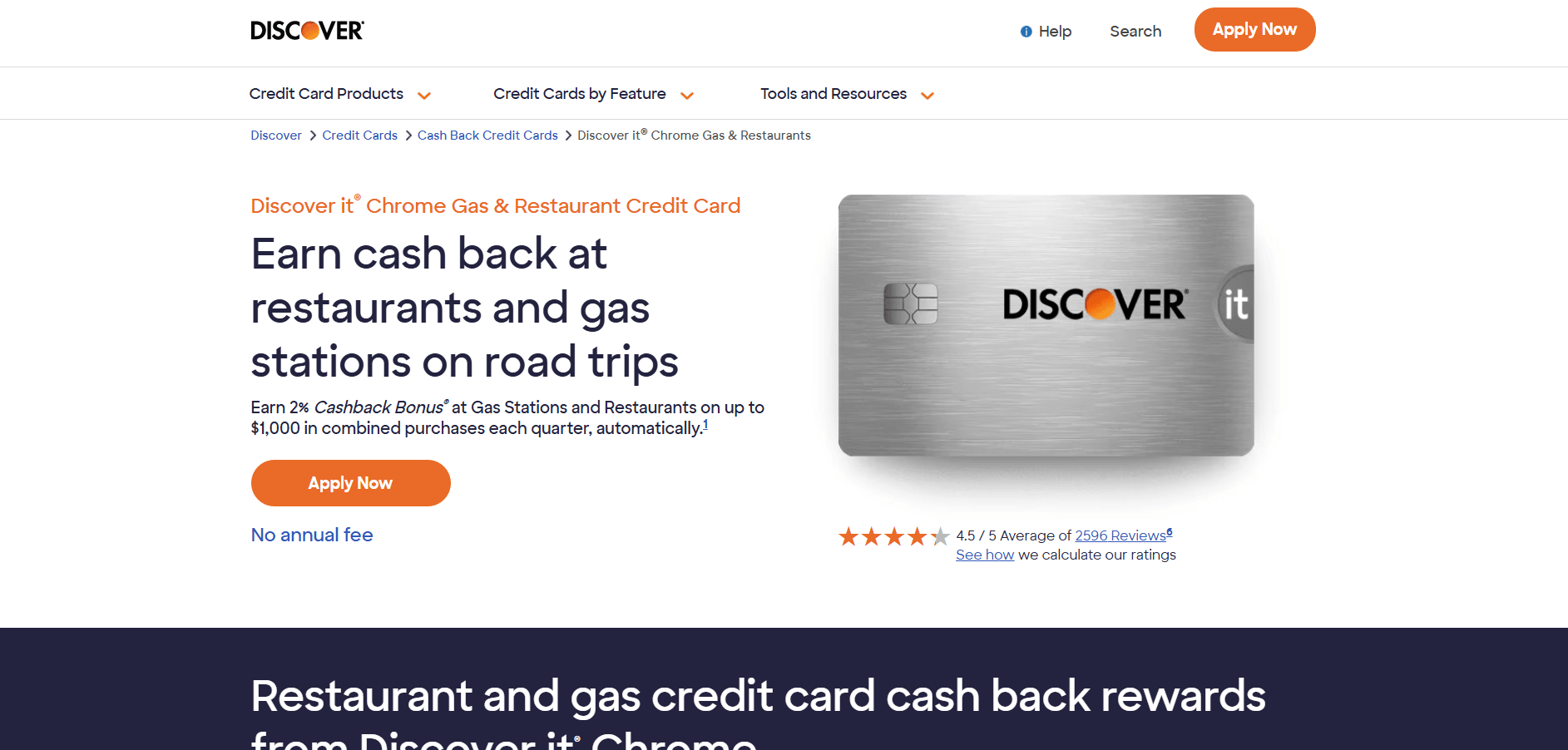 Discover it® Chrome suits very small businesses or single-vehicle operations that want uncomplicated cash-back rewards with no annual fee. The quarterly cap on bonus categories makes it well-matched to businesses with modest fuel use rather than higher-volume fleets.
Features:
2% cash back at gas stations and restaurants on up to $1,000 in combined purchases each quarter
1% cash back on all other purchases
No annual fee
First-year Cashback Match for new cardmembers
Pros and cons of Discover it® Chrome
Pros | Cons |
|
|
4. AtoB universal fuel card (Mastercard network)
Best for fleets needing real-time controls
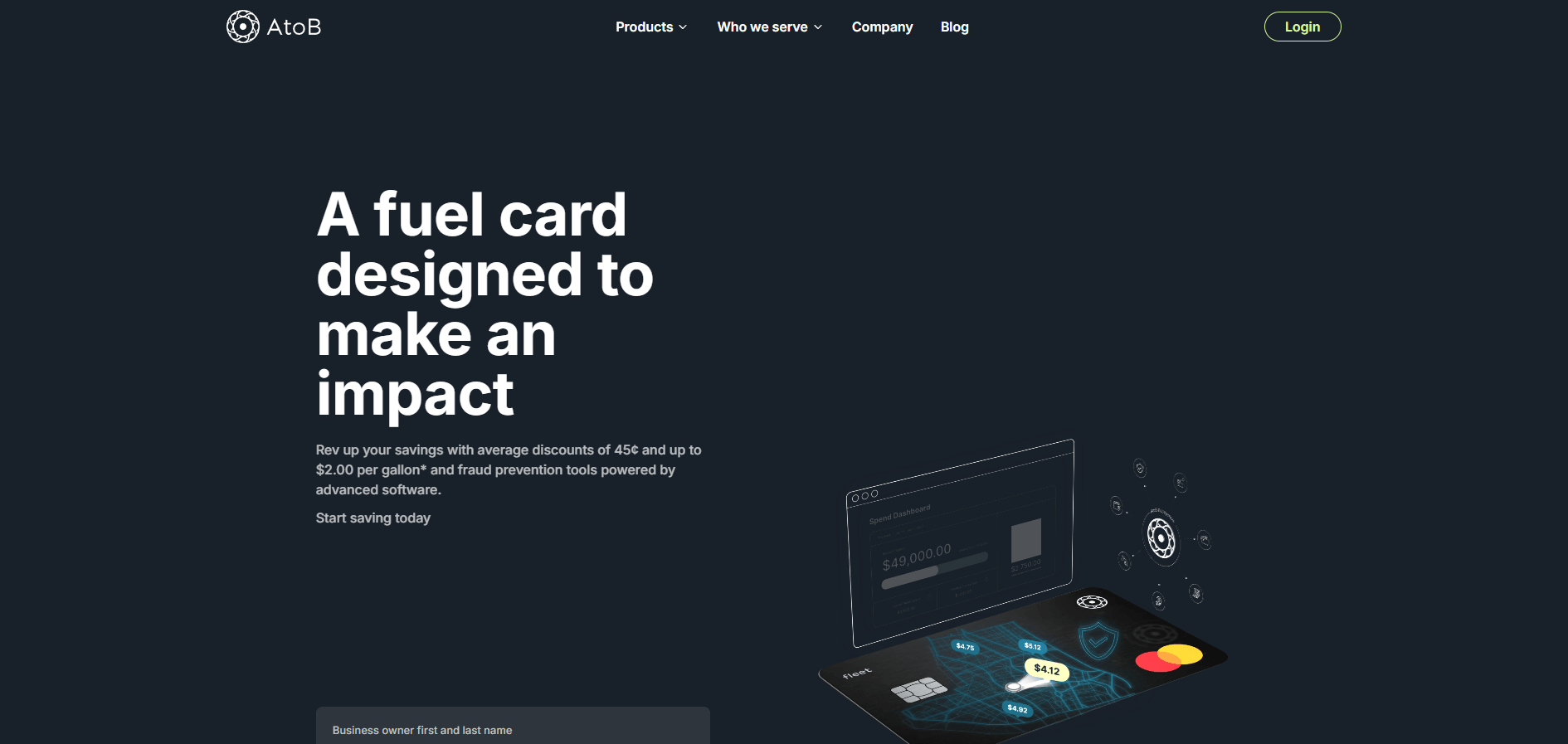 The AtoB Universal Fuel Card works well for mixed fleets needing broad acceptance across truck stops, fuel stations, and gas stations. Because it operates on the Mastercard network, it functions as a universal card with oversight tools and spending controls.
Features:
Near-universal acceptance anywhere Mastercard is accepted for fuel purchases
Real-time spending controls, alerts, and driver verification
Access to discounts and fuel rebates at partner truck stops and fuel stations
Management dashboard and reporting tools for fuel usage and costs
Pros and cons of AtoB universal fuel card (Mastercard network)
Pros | Cons |
|
|
5. Shell Small Business Fleet Card / Shell Card Business
Best for Shell-focused business fuel rebates
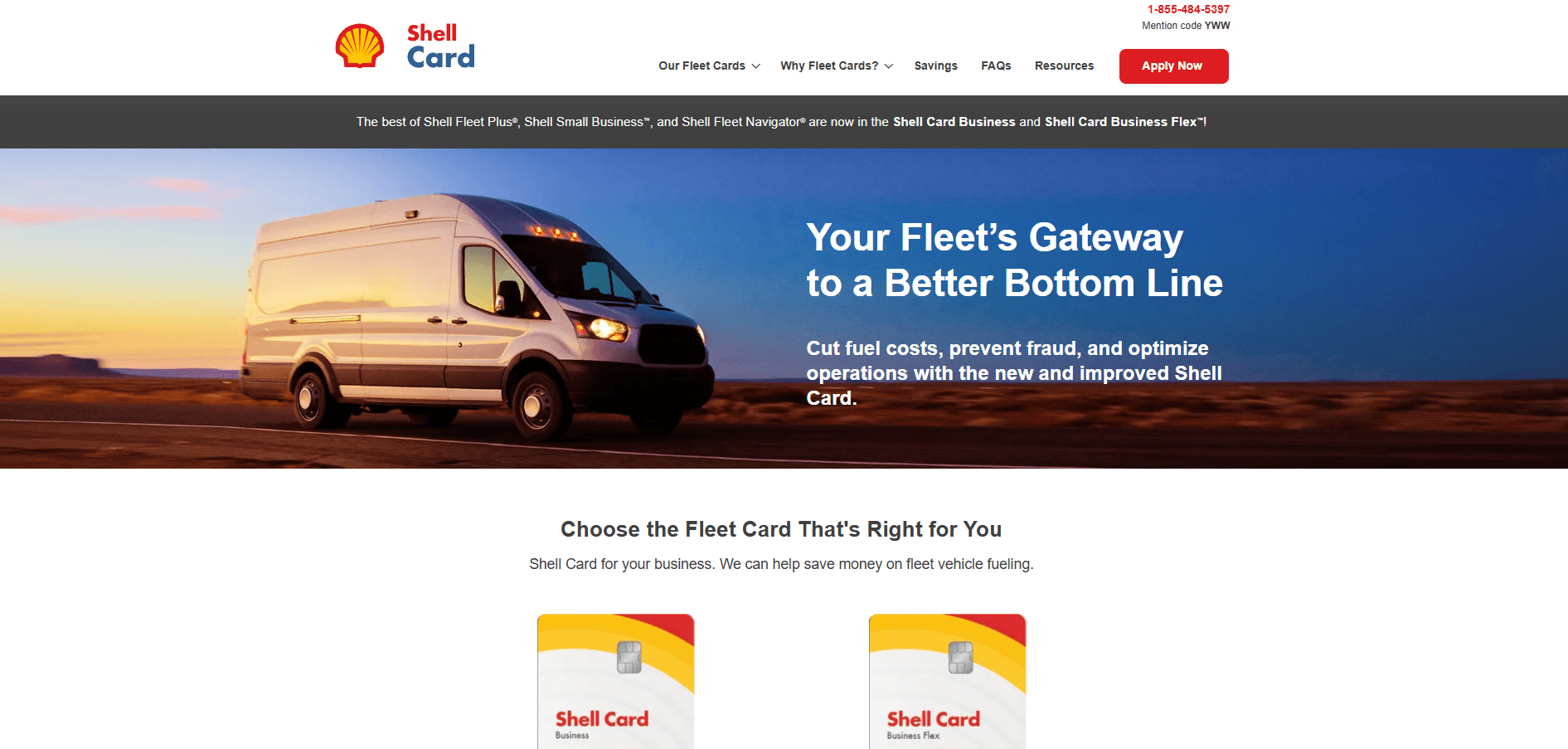 The Shell Small Business Fleet Card is built for companies that regularly fuel at Shell stations and want predictable rebates tied to fuel volume. It provides straightforward management features such as driver ID prompts, fuel-only controls, and purchase tracking, making it useful for multi-vehicle operations with consistent routes.
Features:
Tiered rebates per gallon at Shell stations, with higher rebates at higher monthly volumes (often up to around 5–6¢/gal, depending on card type and usage)
Acceptance at thousands of Shell stations and participating Jiffy Lube locations
Driver IDs, purchase controls, and transaction tracking
Online tools and apps for monitoring fuel activity and account status
Pros and cons of Shell Small Business Fleet Card / Shell Card Business
Pros | Cons |
|
|
Benefits of fuel cards for small businesses
Fuel cards help small businesses manage fuel spending more efficiently by offering more visibility and control than standard credit cards.
Here are the key ways they support daily operations:
Real-time tracking: View transactions as they occur, allowing you to monitor fuel usage across drivers and vehicles.
Fuel-only controls: Restrict purchases to fuel and set limits to prevent unauthorized or non-fuel spending.
Rebates and discounts: Access per-gallon savings or partner rebates that reduce overall fuel costs.
Streamlined record-keeping: Automatically log transactions to cut down on receipt collection and manual reconciliation.
Driver accountability: Use PINs or ID prompts to confirm who is fueling and maintain oversight across your fleet.
Manage fuel and business expenses seamlessly with Rho
Fuel cards give small businesses a simple, structured way to manage fuel costs, especially when multiple vehicles or drivers are on the road. With better visibility, spending limits, and automated tracking, they help reduce waste, prevent unauthorized purchases, and make budgeting more predictable.
If you want to manage fuel spending alongside your broader operating expenses, Rho provides an integrated solution. Real-time controls, built-in expense management, and unlimited virtual and physical cards let you centralize fuel purchases, streamline approvals, and keep your financial records organized—all in one platform. Instead of managing fuel separately, you get a single system to monitor company spending and make stronger cash-flow decisions.
Get started with Rho and simplify how your business manages fuel costs and daily expenses.
FAQs
What are the benefits of fuel cards for small businesses?
Fuel cards give small businesses better control over fuel spending by offering real-time tracking, spending limits, and fuel-only restrictions. They also reduce manual paperwork through automated logs and help create clearer visibility into how drivers and vehicles use fuel day to day.
How do fleet cards help small businesses save money?
Fleet cards can lower fuel costs through per-gallon rebates, partner discounts, and controls that prevent unauthorized spending. By monitoring transactions in real time, businesses can also spot inefficient routes or unusual activity that may be increasing fuel expenses.
What should I look for in a business fuel card?
Key features to consider include acceptance at the stations your team uses most, clear spending controls, and real-time reporting tools. It also helps to compare rebate programs, monthly fees, and whether the card supports multiple vehicles or drivers.
Are fuel cards tax deductible for small businesses?
Fuel purchases made for business purposes are generally tax deductible, whether paid with a fuel card or another payment method. Keeping accurate transaction records is important, and fuel cards can help by providing clear, itemized statements that support year-end reporting.
How do fuel cards improve expense tracking for small businesses?
Fuel cards automatically record each transaction with details like time, location, and driver, making it easier to track spending without collecting paper receipts. This level of detail helps small businesses identify trends, monitor driver activity, and reconcile expenses more efficiently.
FAQs
A fuel card is a payment card designed to help small business owners manage fuel costs more effectively, offering features like real-time tracking, spending limits, and fuel-only controls. Some function like business credit cards with cash-back rewards, while others operate as fleet cards with driver ID prompts and deeper expense tracking.
Fuel cards provide real-time transaction tracking, fuel-only purchase restrictions, per-gallon rebates, and automated record-keeping that reduces manual reconciliation. They also improve driver accountability through PIN or ID prompts, making it easier to monitor spending across multiple vehicles.
Fleet cards are built for managing multiple vehicles and drivers, offering controls like driver IDs, fuel-only restrictions, and per-gallon rebates. Business gas credit cards, like the Blue Cash Preferred or Discover it Chrome, offer broader cash-back rewards but lack fleet-level management tools.
Consider where your drivers fuel up most often, whether you need fleet-level controls like driver IDs and spending limits, and how rebates or rewards align with your monthly fuel volume. You should also compare any monthly or per-card fees against the savings the card provides.
Fuel purchased for business purposes is generally tax deductible regardless of payment method. Fuel cards make this easier by providing itemized transaction records that support accurate year-end reporting.
The AtoB Universal Fuel Card operates on the Mastercard network, giving it near-universal acceptance at gas stations and truck stops across the country. It also includes real-time spending controls and access to partner discounts, making it a strong option for mixed or multi-region fleets.
The Shell Small Business Fleet Card offers tiered per-gallon rebates at Shell stations, with higher savings at higher monthly fuel volumes. It also includes driver ID prompts and purchase controls, making it practical for multi-vehicle operations with consistent routes near Shell locations.
Rho Corporate Card combines real-time spend controls, unlimited virtual and physical cards, and integrated expense management so businesses can track fuel spending alongside all other operating costs in one platform. This gives small businesses a unified view of company spending without needing a separate fuel-only card.