


Key takeaways
Business travel and expense management software helps automate expense reporting, reimbursements, and policy enforcement.
Real-time data sync and mobile access reduce manual work and improve compliance.
Virtual cards and spend controls simplify travel spending and prevent policy violations.
Integration with accounting systems like NetSuite and QuickBooks accelerates the month-end close.
Rho unifies corporate cards, expense tracking, and accounting syncs in one platform for complete visibility.
If your finance team still spends days chasing missing receipts or sorting through spreadsheet reports, you’re not alone. Business travel remains one of the largest unmanaged cost centers for growing companies, and small breakdowns in tracking can quickly snowball into big reporting headaches.
Business travel and expense management software centralizes this process. It automates expense tracking, policy enforcement, and reimbursements while syncing every transaction directly to accounting platforms like NetSuite or QuickBooks. The result is faster reporting, stronger compliance, and clear visibility into every dollar spent on company travel.
According to Mordor Intelligence, the T&E management software market is valued at approximately $4.5 billion to $7.5 billion in 2025, and is projected to grow at a CAGR of ~12% to 17% through 2030.
This guide explains how the best travel and expense management solutions work, what features matter most, and how Rho helps finance teams simplify spend tracking, enforce policies, and close faster, all in one platform.
What is business travel and expense management software?
Business trips and expense management software systemize how companies track, approve, and repay employee travel expenses automatically. It replaces spreadsheets and paper receipts with digital workflows that capture every transaction in real time.
Many systems support systems such as:
Expense submission and approval workflows
Travel booking or integrations with booking tools
Per diem tracking
Policy enforcement for categories and spending limits
Integration with accounting or ERP systems like NetSuite and QuickBooks
The best solutions combine automation with data sync, giving finance teams a single source of truth for all travel and expense activity. Some operate as standalone tools, while others, like our platform, integrate travel, expense, and corporate card management into a single unified platform.
Key features of modern expense management software
Modern expense management platforms are designed to solve one of finance’s biggest challenges: controlling travel and operating spend without slowing employees down. The best systems combine automation, real-time data, and policy-driven controls to simplify how teams capture receipts, review transactions, and synchronize books at month-end.
Below are the core capabilities that make these tools indispensable for modern finance leaders.
AI-powered automation
AI-driven tools automatically capture receipts, categorize expenses, and suggest GL codes. This reduces manual data entry and speeds up reimbursement cycles. Employees can submit expenses instantly, while finance teams gain accurate, audit-ready data.
Integrations and ERP connectivity
Direct integration with accounting software eliminates duplicate entries and keeps ledgers up to date. When expenses sync automatically to NetSuite or QuickBooks, finance teams can close the books faster and maintain accurate reporting.
Mobile access for employees
A mobile app lets employees upload receipts, track reimbursements, and approve expenses from anywhere. This flexibility improves compliance and reduces delays in expense submission.
Corporate card controls
Corporate cards, both physical and virtual, simplify travel spending. Finance teams can set category restrictions, spending limits, and auto-receipt capture rules. Each transaction is posted in real-time, providing instant visibility into company spending.
Dashboards and real-time visibility
Modern dashboards show travel and expense data by department, project, or employee. CFOs can monitor spending patterns, identify outliers, and adjust budgets quickly. Real-time analytics replace static reports with actionable insights.
Top business travel and expense management platforms
Choosing the right platform depends on your stack, travel volume, and policy complexity. The goal is simple: control spending, reduce manual work, and keep clean data flowing into your accounting system.
The summaries below include pros, cons, and typical fit so you can match tools to your needs.
1. Rho
Rho Landing page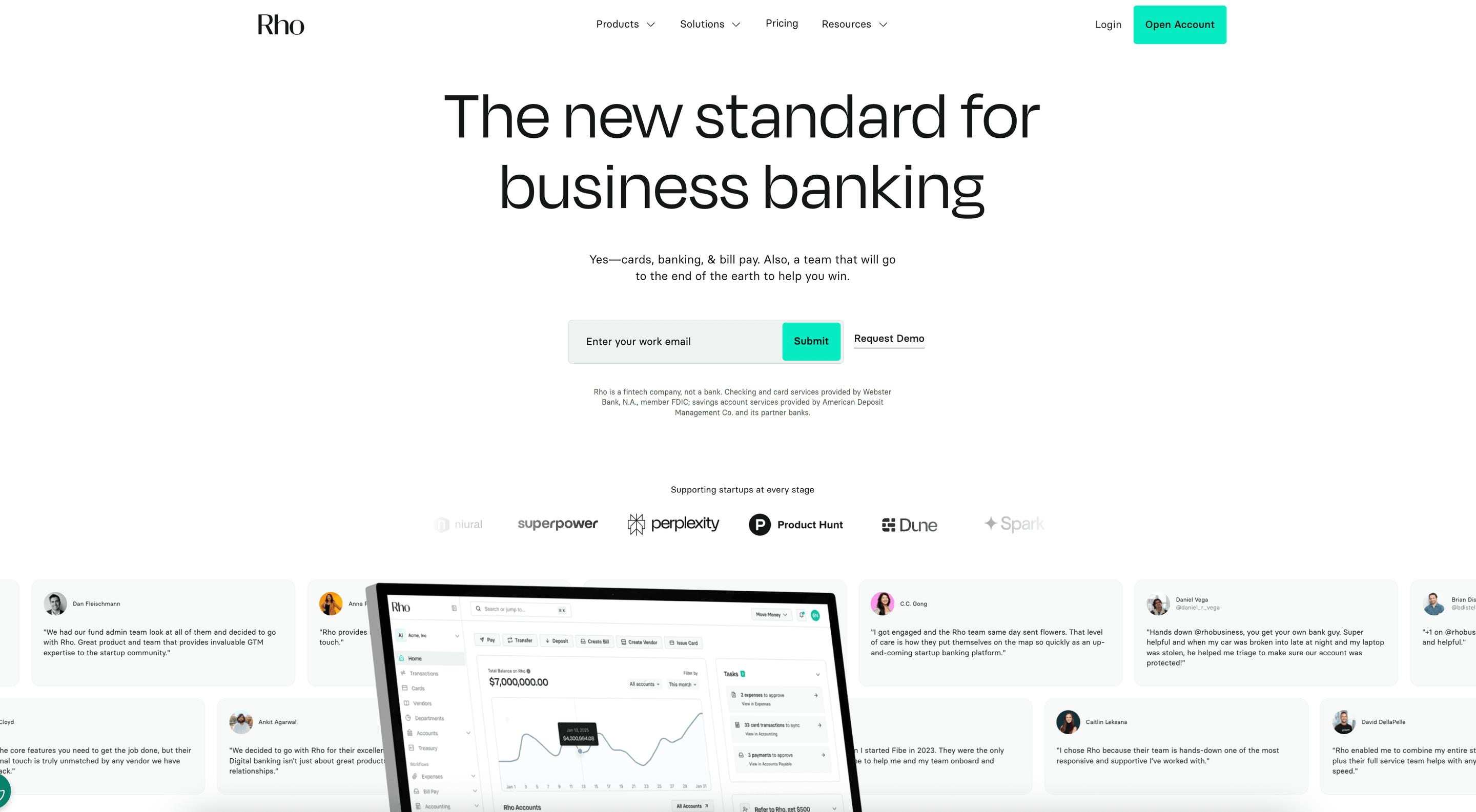
Rho brings cards, travel spending, expense management, and AP workflows into one system, giving finance teams real-time visibility across every trip, transaction, and policy. The platform helps companies control travel budgets with granular card rules, automated categorization, and accounting integrations that reduce manual reconciliation. Rho works well for teams that want a unified view of all travel and operating spend without switching between disconnected tools.
Key features of Rho:
Unlimited virtual and physical cards for travelers: Set merchant restrictions, per-trip budgets, daily caps, and category-based limits to control spend at the source.
Real-time expense management: Automated receipt capture, coding, and syncing keep travel expenses accurate and audit-ready as they occur.
Integrated AP for travel-related vendors: Upload invoices for hotels, events, or travel agencies and route them through structured approvals.
Centralized dashboard for all spend: Finance teams can review trip-level expenses, monitor trends, and enforce consistent policies across departments.
Treasury tools for unused travel budgets: Move excess cash into short-term yield products to keep funds productive between travel cycles.
Pros and cons of Rho
Pros | Cons |
|
|
2. Brex
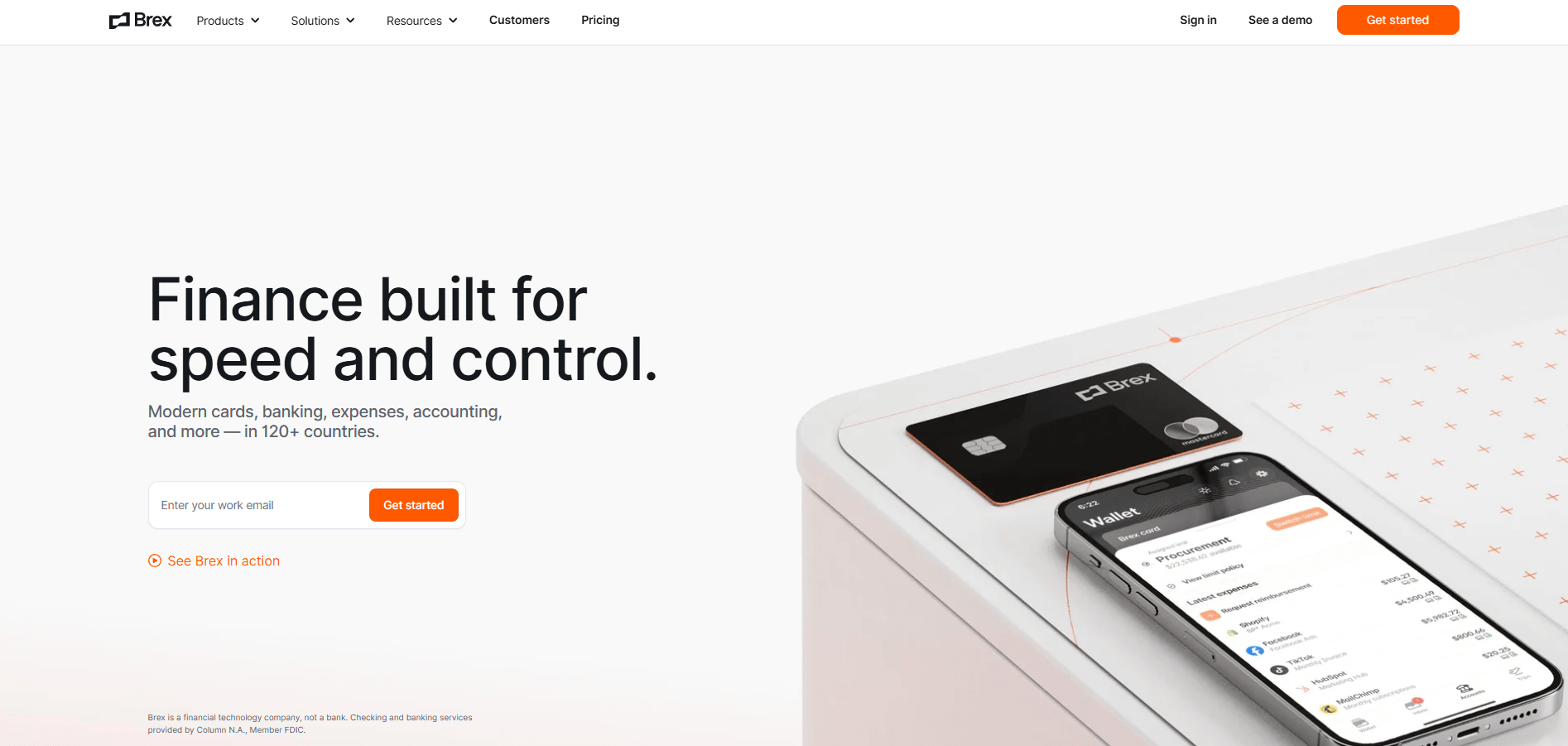 Best for startups seeking scalable card and expense automation
Brex is a card‑first expense platform used by startups and growth teams. It provides rules-based spend controls, merchant/category restrictions, automatic transaction categorization, and data synchronization to common accounting systems. Capital One completed its acquisition of Brex in April 2026.
Teams typically use Brex for issuing corporate cards, reviewing transactions, and handling reimbursements; Brex also offers built-in travel booking governed by preset travel policies.
Key features of Brex:
Corporate cards with native controls: Real-time spend tracking and merchant restrictions for team-level budgets.
Expense management automation: Auto‑categorization and reconciliation across departments.
Dashboard insights: Central visibility into employee spend and company cash flow.
Integration with ERP tools: Works seamlessly with accounting software like NetSuite and QuickBooks.
Pros and cons of Brex
Pros | Cons |
|
|
3. Navan (formerly TripActions)
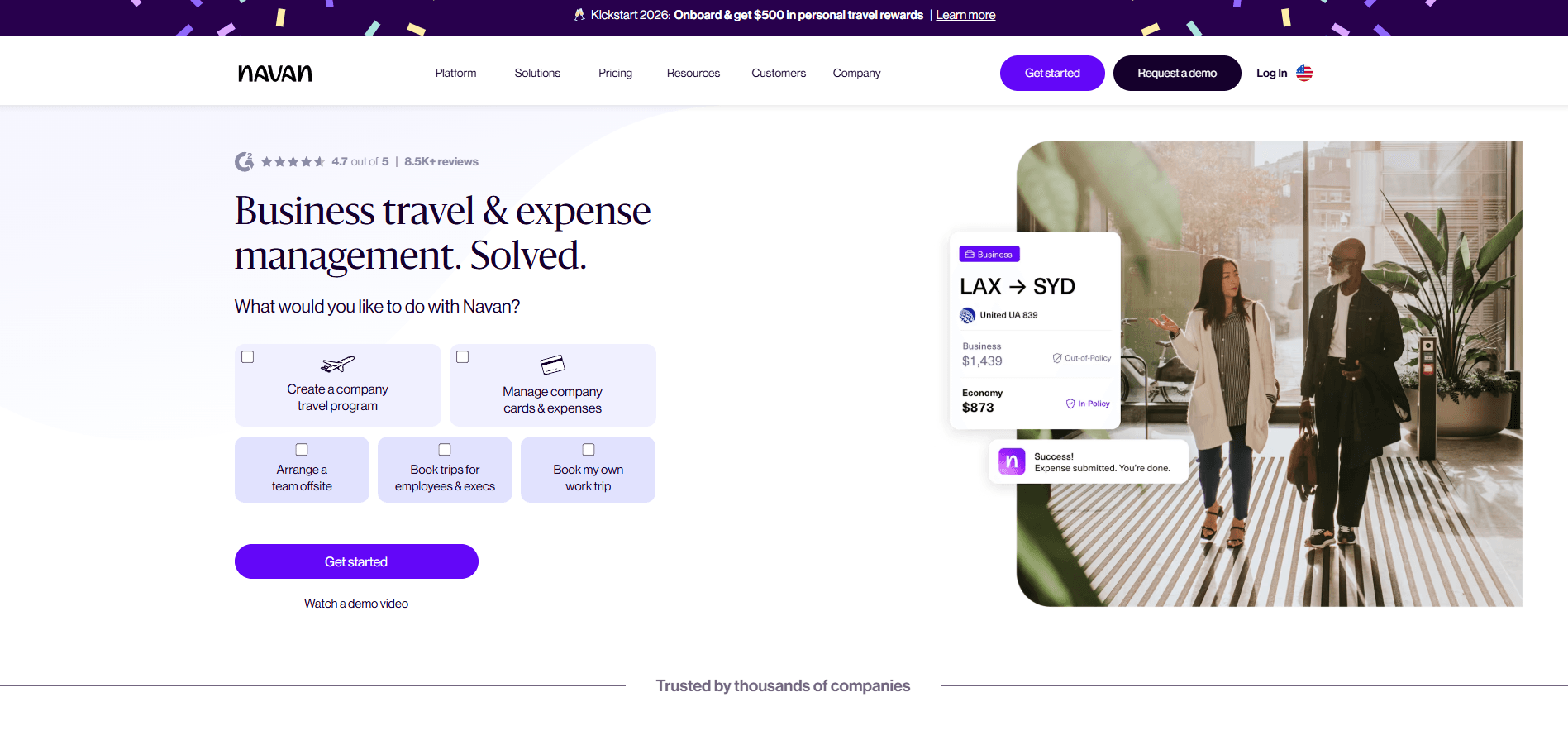 Best integrated travel booking and expense management system
Navan is a travel and expense platform that includes built‑in booking and expense capture in one system. It applies travel policies at booking, manages itineraries, and links trip data to matched expenses and reporting, with integrations available for accounting sync. It is commonly used by mid‑size and enterprise teams with frequent or international travel that need centralized policy controls and consolidated travel/expense data.
Key features of Navan:
Integrated flight and hotel booking tools: Built‑in options for policy‑compliant travel scheduling.
Automated expense capture: Scans receipts and matches them to booked itineraries automatically.
AI reporting: Advanced analytics and benchmarking that help finance teams evaluate and refine travel policies.
Mobile-first access: Employees can book, manage, and expense their trips in one app.
Pros and cons of Navan
Pros | Cons |
|
|
4. Expensify
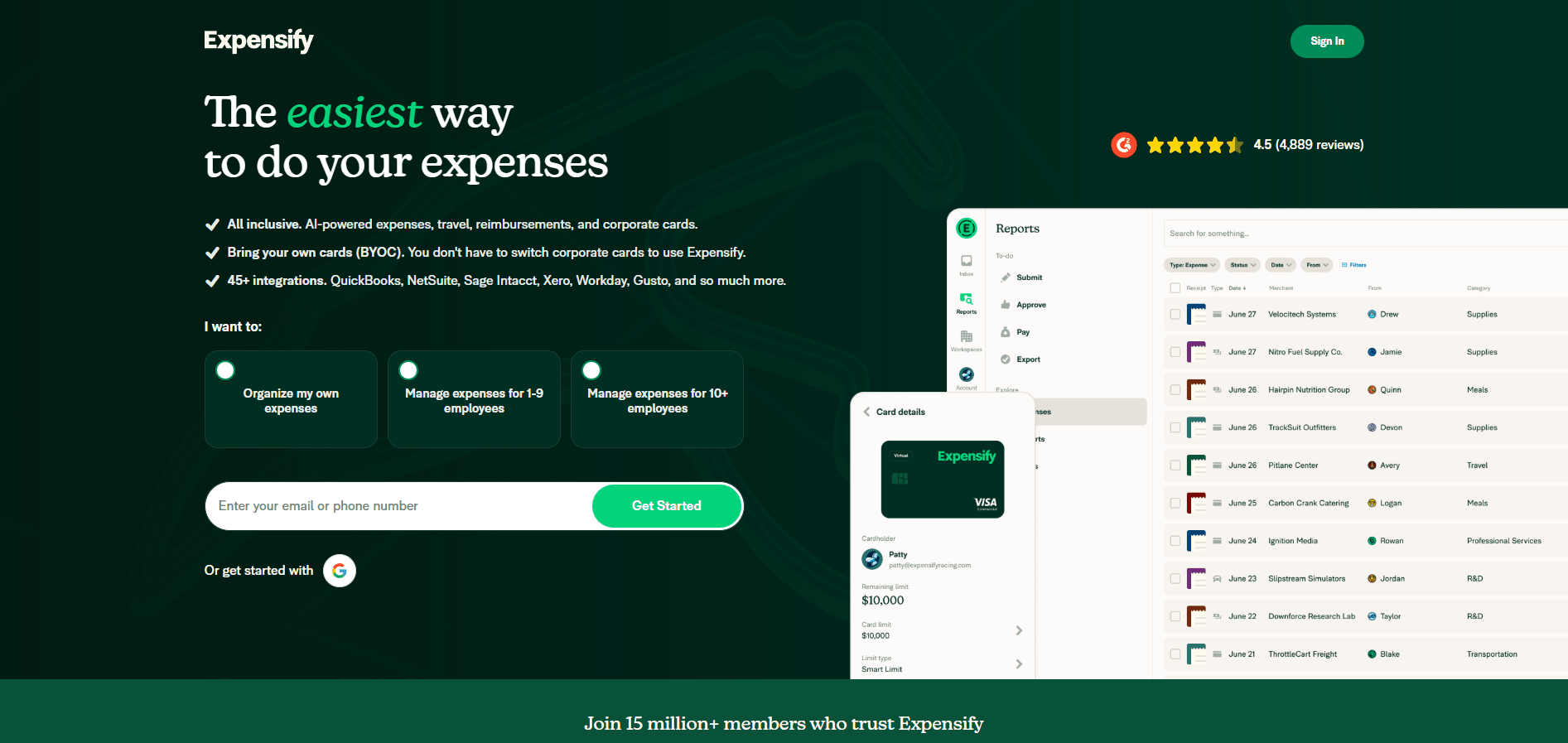 Best for small businesses managing receipts and reimbursements
Expensify is an expense reporting application oriented toward reimbursement workflows. It provides mobile receipt capture, mileage and per diem entry, configurable approval chains, and synchronization or export to common accounting systems. Teams typically use Expensify when employees submit out‑of‑pocket expenses and need a lightweight mobile submission rather than card‑level controls or integrated travel booking.
Key features of Expensify:
SmartScan receipt capture: Digitizes and categorizes expenses in seconds.
Custom approval workflows: Managers can review and approve submissions instantly.
Mileage and per diem tracking: Built-in tools simplify recurring reimbursement tasks.
Integrations: Connects to QuickBooks, Xero, and NetSuite for reconciliation.
Pros and cons of Expensify
Pros | Cons |
|
|
5. SAP Concur
SAP Concur landing page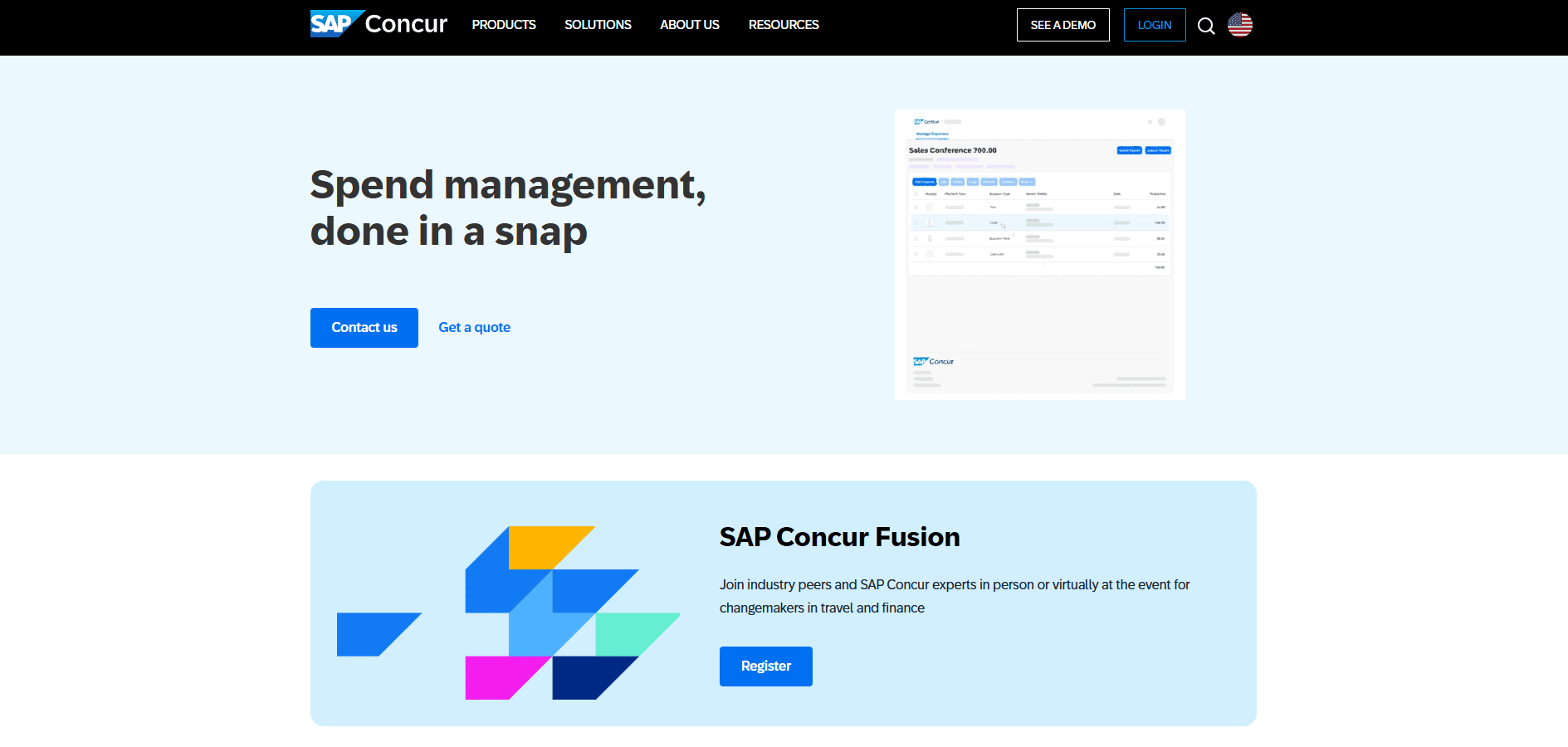
SAP Concur is a travel and expense system that includes booking, expense capture, and policy controls in one platform. It supports multi-currency and tax handling, applies regional compliance rules, and integrates with SAP and other ERPs for accounting synchronization. It is typically used by large or multi-entity organizations that require centralized governance and global travel workflows.
Key features of SAP Concur:
Enterprise travel booking system: Integrates global supplier networks and corporate travel programs.
Multi-currency and international tax support: Handles global transactions with compliance tracking.
Advanced analytics: Provides benchmarks, expense forecasting, and custom reporting tools.
ERP integration: Designed to work natively with SAP and third-party systems alike.
Pros and cons of SAP Concur
Pros | Cons |
|
|
What to look for when choosing a travel and expense management solution
Choose a platform that fits your ledger, policies, and team today, and scales cleanly as you grow. Use the checklist below to assess core requirements and confirm fit before you buy.
ERP and accounting integration for accurate reporting: Native two-way sync with NetSuite or QuickBooks, support for custom fields, and reliable, timely updates to the GL.
Real-time analytics and dashboards: Live views of spend by department, project, and trip, with drill-down to transactions and exportable audit trails.
Configurable approval workflows and granular spend controls: Amount tiers, manager chains, category and merchant rules, receipt and per diem requirements.
Cards, reimbursements, and travel controls: Physical and virtual cards with limits and category locks, fast ACH reimbursements, and optional travel-booking integrations.
Mobile-first design for easy employee adoption: Tap-to-capture receipts, push reminders for missing items, quick approvals, and offline-friendly capture.
Security and auditability: SOC 2 Type II, SSO, role-based permissions, and immutable audit logs that stand up in reviews.
Implementation and support: Clear timeline, admin training, responsive support with SLAs, and a named success contact.
Global and multi-entity readiness: Multi-currency, VAT or GST handling, and consolidated reporting across entities.
Small businesses may favor fast setup and a strong mobile app, while larger organizations need multi-entity controls, deeper integrations, and strict audit capabilities.
Implementing travel and expense management software
Rolling out an expense management solution improves accuracy, compliance, and efficiency. A structured implementation plan helps finance teams realize these benefits quickly.
Define travel and expense policies: Establish clear guidelines for per diems, reimbursement timelines, and approved categories. Consistent rules create a foundation for automation and reduce policy disputes later.
Configure approval workflows and spending limits: Map workflows to your organizational structure so the right managers review the right expenses. Set automated spending caps and category rules that enforce policies without added manual oversight.
Issue corporate and virtual cards: Provide employees with physical or virtual cards tied to predefined budgets. Built-in controls and real-time tracking provide finance teams with complete visibility over all transactions as they occur.
Integrate with accounting software: Connect expense data directly to tools like NetSuite or QuickBooks. Automated syncs keep your general ledger accurate, speed up reconciliation, and shorten month‑end close times.
Train and onboard employees: Use a mobile app to guide employees through expense submission, receipt capture, and compliance steps. With Rho, onboarding is fast; employees can join using their phone number, and permissions are applied automatically.
Benefits of automating travel and expense management
Automating travel and expense management replaces scattered receipts and manual reviews with a predictable, policy-driven workflow. When cards, reimbursements, and accounting stay connected, you get clean data in real time and a month-end close that stays on schedule.
Here are the outcomes finance teams typically see:
Less manual work: AI-powered receipt capture, auto-categorization, and policy checks remove data entry and prevent duplicate submissions.
Faster reimbursements: Mobile submission, automatic routing, and ACH payouts cut cycle time from weeks to days for out-of-pocket and per diem claims.
Stronger policy compliance: Card-level category controls, spending limits, and required receipts enforce company policies at the point of purchase and reduce exceptions.
Real-time visibility: Live dashboards show travel spend by department, trip, merchant, and employee, with alerts for over-budget activity and missing receipts.
Cleaner month-end close: Two-way sync to NetSuite or QuickBooks, pre-coded transactions, and complete audit logs reduce reconciliations and shorten close.
Lower total cost: Fewer point tools, fewer errors, and fewer hours spent on expense processing reduce operating costs while improving accuracy.
Cut travel expense chaos with Rho
Modern T&E software reduces manual work, tightens policy compliance, and gives finance leaders real-time visibility across trips and cards. Bringing travel, expenses, and accounting into one workflow shortens close and improves accuracy without adding headcount.
We bring cards, expenses, AP, and ERP sync into one workspace so you can manage travel spend in real time. You can issue virtual and physical corporate cards with category rules and limits, capture receipts automatically, and sync clean data to NetSuite or QuickBooks. One dashboard shows trip-level spend, exceptions, and audit trails so your team can move faster with confidence.
Ready to replace spreadsheets and point tools with one system built for finance teams? Get started with Rho today.
FAQs
What is the best expense management software for corporate travel?
The best option depends on your company’s size and needs. We offer an all-in-one platform combining corporate cards, expense tracking, and accounting integration for visibility.
How does travel and expense software integrate with accounting tools?
Modern platforms connect directly to systems like NetSuite and QuickBooks, syncing expense data automatically to maintain accurate ledgers and simplify reconciliation.
What are virtual cards, and how do they help control travel spend?
Virtual cards are digital credit cards issued for specific employees or trips. They allow finance teams to set spending limits, restrict categories, and track every transaction instantly.
How can finance teams automate reimbursements?
Automation tools capture receipts, categorize expenses, and route approvals automatically. Once approved, repayments are processed electronically, reducing delays and errors.
Why do small businesses need real-time visibility into company spending?
Current-time visibility helps small businesses control cash flow, prevent overspending, and make faster financial decisions without waiting for month-end reports.